Technical Report
HMX Zone Website - Full-Stack Commercial Site Built End-to-End
This is the first full-stack website Haroon built for himself and HMX Zone: a public company site, portfolio surface, service catalog, intake system, proof index, case-study shell, blog structure, and deployment-ready app.
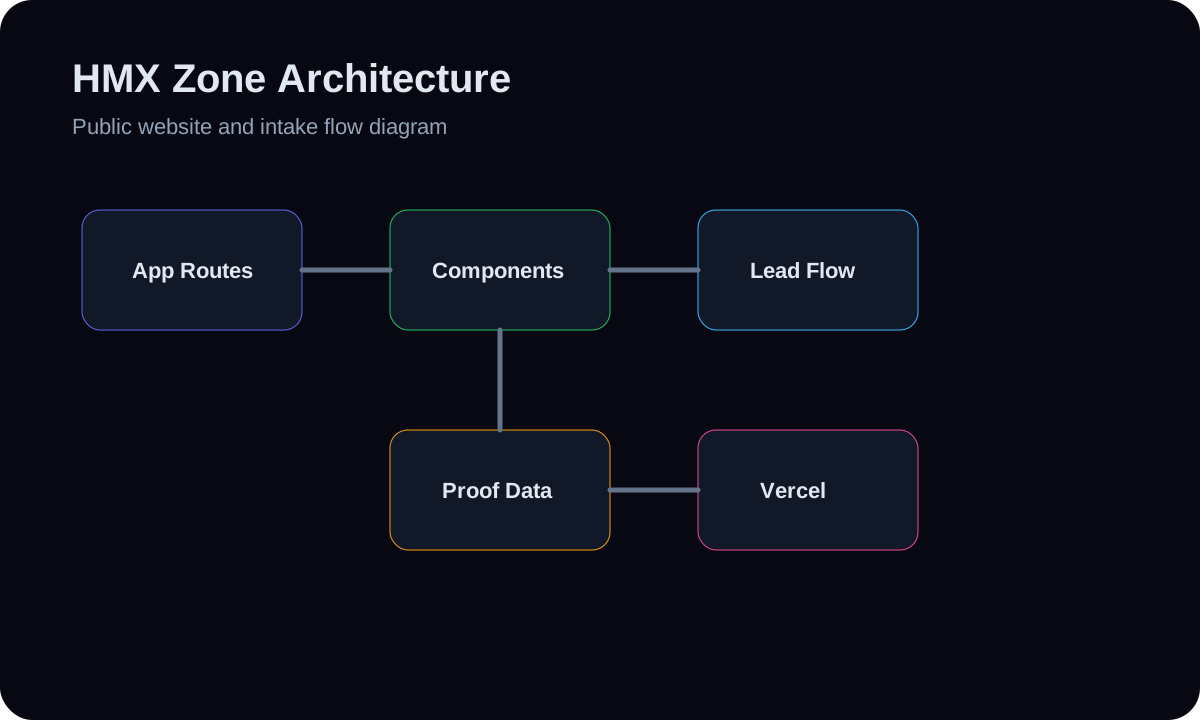
Project goal
Turn HMX Zone into Haroon's first website built for himself: a startup/company/portfolio surface for custom websites, CRM workflows, automations, AI agents, dashboards, packages, proof, and intake paths.
Site architecture
The app uses the Next.js App Router with route-level pages for home, systems, packages, proof, case studies, blog, get started, booking, legal pages, and this technical report.
Routes and pages
Primary public routes include /, /systems, /packages, /proof, /case-studies, /reviews, /crm-saas, /blog, /get-started, /about, /tech-stack, and /technical-report/hmx-zone.
Frontend stack
The frontend is built with Next.js 16, React 19, TypeScript, Tailwind CSS 4, reusable sections, animated client components, and route-specific metadata.
Backend and data stack
The project is backend-ready with server actions, Supabase lead storage, email notifications, rate limiting, Turnstile support, and structured data files for packages, systems, proof, blog, and case studies.
Form flow
The get-started flow reads source, CTA, package, system, proof, case-study, and UTM parameters, validates the intake, scores fit privately, stores structured context, and redirects successful leads to booking.
Proof and case-study system
Proof & Blueprints points to HMX-owned routes, redacted diagrams, build notes, reviews, the waitlist, navigation, and intake flows without exposing private client data or exact implementation recipes.
Content and blog system
The blog supports filesystem and Supabase-backed posts, article metadata, reading time, author context, related posts, share controls, and CTA blocks.
SEO setup
Canonical URLs point to www.hmxzone.com, sitemap and robots routes are generated, Open Graph images exist across routes, and article/FAQ/service/breadcrumb schema are used where relevant.
Analytics and monitoring
The site includes Vercel Analytics, Speed Insights, safe lead-submitted analytics, Sentry context for form errors, and proof-first QA notes.
Deployment
The production target is Vercel, with environment variables documented for Supabase, Resend, Upstash, Turnstile, Sentry, and analytics behavior.
Responsive design
Routes use responsive grids, constrained content widths, stable cards, mobile navigation, and form controls sized for repeated real use.
Accessibility
The app includes a skip-to-content link, labeled form controls, visible focus states, keyboard-accessible proof filters, accessible nav states, and alert roles for form errors.
Reduced-motion support
Motion-sensitive UI is isolated in client components and the app includes motion preference handling so animated surfaces can degrade safely.
Reusable components
Shared components include tracked CTAs, primary CTA sections, animated sections, buttons, package cards, proof filters, case-study diagrams, navigation, footer, and form fields.
Future improvements
Next improvements should focus on more approved proof media, live Supabase migration verification, richer case-study artifacts, browser screenshot QA, and production monitoring after deploy.
Build report
Want this kind of site and proof trail for your business?
Start with the intake so the route plan, form flow, proof path, and verifier plan are scoped before implementation.